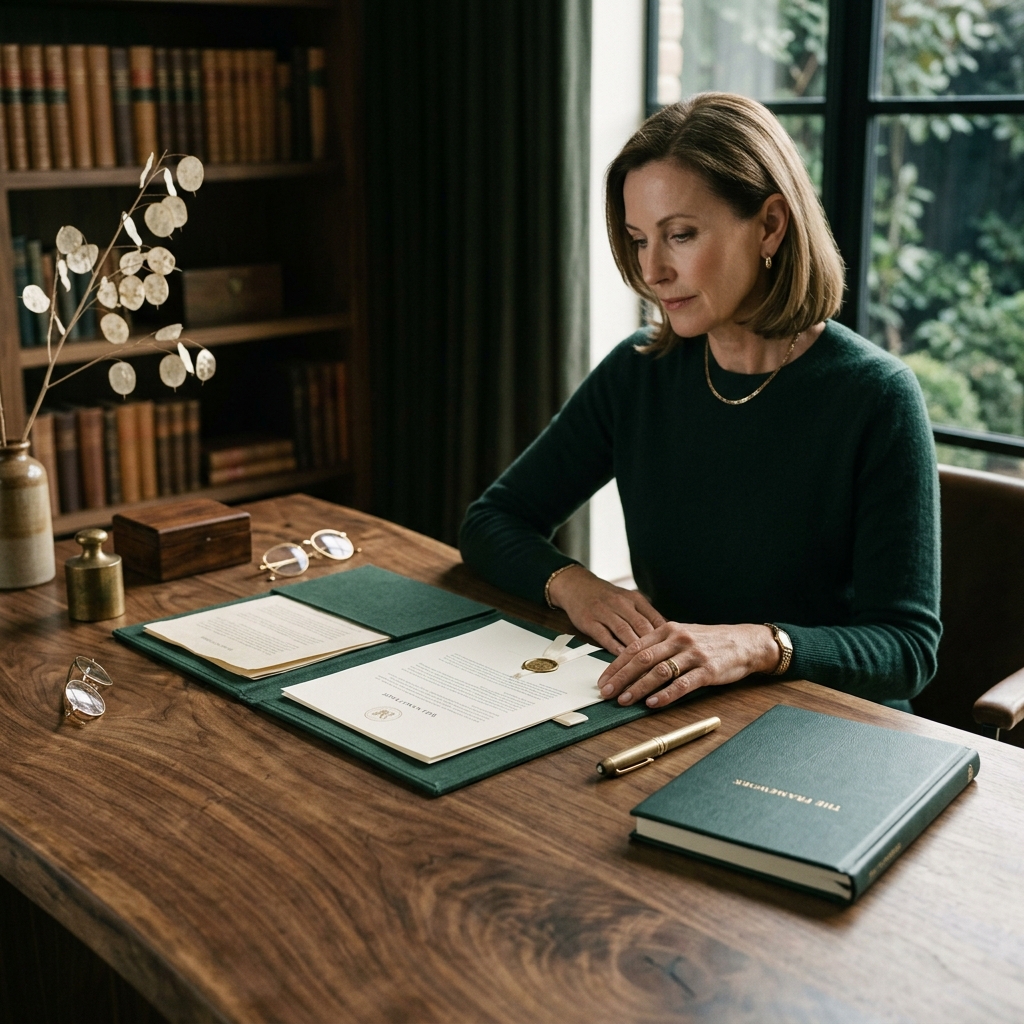
- A will tells your family what you wanted. An if-I-die-tomorrow file tells them how to find it — and almost no one builds the second document.
- The file is the map, not the estate. Five parts: identity, documents, money (every account's existence, not its balance), people (your team with direct numbers), and wishes.
- Building the file is the easy half. The document is useless if no one knows it exists: tell three people, on the same day, in the same way.
- Inside the file goes one document that isn't legal — a one-page letter your survivors will read more times than anything else you ever wrote them.
- Start now, update it once a year in the week of your birthday, and update the affected section the week anything significant changes.
The call comes — the parent, the partner, the sibling, the friend's mother — and within forty-eight hours, the family is in a kitchen looking at a stack of papers and asking the same three questions over and over.
Where is the will?
>
Who is the lawyer?
>
Is there life insurance — and where?
What they find, usually, is some of the documents but not all. A folder marked "important" last updated in 2014. A safe-deposit box no one has the key to. An attorney whose phone number rings into a dead voicemail because she retired years ago. A list of accounts written in a husband's handwriting on a yellow legal pad — a list that does not include, it will turn out, three of his accounts.
This is not a failure of love. It is a failure of structure. The work of leaving a navigable life is not the work most people think estate planning is, and very few people are taught the difference.
---
A will tells your family what you wanted.
An if-I-die-tomorrow file tells them how to find it.
Fewer than half of American adults have a will. Almost none of them have the second document. The will is for after the dust settles, sometimes months after. The file is for the day after — when the dust has not settled and your survivors still have to call the right people to begin.
There is a specific kind of loneliness in watching a family search for what they cannot find, while the person who could have told them where it was is the very person who is gone. The file is what prevents that. It is the smallest, most loving, most practical document you will ever build.
---
What goes in it is everything someone would need to begin. Not the whole estate; the map to it. Five parts.
Identity. Your full legal name, date of birth, Social Security number, marital status. The document the funeral home will need. The paperwork the lawyer will not have to wait for. Documents. The will and where it lives. The trust, if there is one. The durable power of attorney. The healthcare proxy. The HIPAA release. The location of each, dated. Money. Every account, even small ones — the existence, not the balance. Bank, brokerage, retirement, HSA, pension, deferred comp, the 529 you forgot you opened. Insurance policies and their carriers. The HSA at the company three jobs ago. The crypto wallet, if there is one, and how to access it. People. Your team — financial advisor, attorney, CPA, insurance agent, primary care physician. Names. Direct phone numbers, not switchboard. Email addresses. The relationship history (how long, what they handle). Wishes. Burial, cremation, donation. Service preferences. People to notify personally. Charitable bequests. The one sentence you want said out loud.The Inventory tool inside The Personal Longevity Plan walks you through every field. The point of this essay is not to fill in the fields. The point is to make the case that they need to be filled in at all.
---
Building the file is the easy half. The hard half is that the document is useless if no one knows it exists.
This is the part almost everyone gets wrong. The file gets built, often beautifully, and then it lives on a hard drive only the builder can access. Or in a safe whose combination is in a drawer only the builder remembers. Or in a folder labeled with a name only the builder would think to look for.
Tell three people. The executor. The spouse, if there is one. One other person — a sibling, an adult child old enough, a trusted friend. Tell each of them, on the same day, in the same way:
If I die tomorrow, here is where to find the file. Here is what is in it. Here is what I want you to do with it.
Three people, because one might be unreachable, one might be too close to the loss to act, and one is the safety net. Three is the floor, not the ceiling.
---
Inside the file, there is one more document that doesn't belong with the others. A letter. Not a legal one — a personal one.
Most wills are too long and too lawyer-shaped to contain the things you most want to say. The letter is where those things go. What you hope for them. What you want them to remember. The story behind a piece of jewelry, the meaning of a charitable bequest, the apology you owe. The things that, if you don't write them down, no one will ever know you wanted to.
The letter does not have to be long. The best ones are not. A page, written once, updated when it needs to be, kept in the file with everything else. Your survivors will read it more times than anything else you ever wrote them.
---
Now is when to start. There is no other answer. The version that exists tomorrow is better than the perfect version that exists never.
Update it once a year. The same week as your birthday is a useful anchor — it falls outside tax season, outside the holidays, and links the document to a moment you are already paying attention to yourself. Sit down for an hour, walk through each section, change what changed. Most years the changes are small. Some years they are large. Either is fine.
Once a year is the minimum. Any time something significant changes — a new account, a new advisor, a child moving, a marriage ending — open the file and update the affected section that week, not at the next birthday.
---
The file is not for you. You will not be the one who needs it.
It is for the daughter who comes home from work to the news and does not know where to begin. The partner who cannot remember the name of your accountant. The son who is the executor and has never been an executor and has no idea what one does.
For each of them, the file is a hand on the shoulder from the person who used to be there. It says:
I knew this day might come. I thought about you. Here is what I want you to do first.
You are not building this for yourself. You are building it for the morning you won't be in.
---
When you're ready. The Inventory inside The Personal Longevity Plan is the operational version of this essay — every field, every prompt, save-your-work form. The companion piece, Digital life after a death (or before), picks up where this one ends — the accounts that do not live on paper and the people who will need to find them anyway.Frequently Asked Questions
What is an if-I-die-tomorrow file?
A single document that tells your survivors how to begin on the day after — where the will is, who the lawyer is, whether there is life insurance and where — so they are not searching a kitchen table of papers for what only you could have told them. Fewer than half of American adults have a will; almost none have this.
What should be in an if-I-die-tomorrow file?
Five parts: identity (legal name, date of birth, Social Security number, marital status); documents (will, trust, durable power of attorney, healthcare proxy, HIPAA release, and where each lives); money (every account, policy and wallet — the existence, not the balance); people (advisor, attorney, CPA, insurance agent, physician, with direct numbers); and wishes (burial or cremation, service preferences, people to notify, bequests).
Who should know where my important documents are?
Three people, told on the same day in the same way: the executor, the spouse if there is one, and one other — a sibling, an adult child old enough, a trusted friend. Three because one may be unreachable, one may be too close to the loss to act, and one is the safety net.
How often should you update an estate-planning file?
Once a year at minimum — the week of your birthday is a useful anchor, outside tax season and the holidays. And any time something significant changes — a new account, a new advisor, a marriage ending — update the affected section that week, not at the next birthday.
References & Notes
- Fewer than half of American adults have a will — 24% in Caring.com's 2025 Wills and Estate Planning Study, the lowest share the survey has recorded.
- Estate-planning experience and end-of-life conversations among U.S. adults: Pew Research Center, "Experiences with estate planning and discussing end-of-life preferences" (November 2025).
- Companion tools: The Personal Longevity Plan (Inventory); Digital life after a death (or before); The Ethical Will Template.